зміст
A case for equipment is usually perceived simply: a strong корпус, closed – and this is enough. The main thing is that it does not crack and withstands the road. But in practice, a case begins to “work” not when it stands still, but when it is transported. And exactly at this moment the main thing becomes visible: the problem is often not on the outside.
Because even if the корпус is intact, the equipment inside can receive impacts, shift, and gradually fail. Protection of equipment is not only about the shell. It is about what happens inside during movement.
If there is free space inside, there is no fixation, or everything is placed “as it happened” — the case stops protecting. It just closes the equipment, but does not control it. And at some point this begins to give consequences.
Reason 1. When there is space to move inside
Usually it seems: if everything fits – it means ok, but this is exactly where everything begins, because on the road the equipment does not lie calmly – it constantly slightly shifts, somewhere gets bumped, somewhere slightly gets hit.
And this happens again and again while the case is in motion, therefore even a small free space inside is already enough for everything to start moving.
As a result:
- the equipment constantly shifts
- elements collide with each other
- small but regular impacts appear
- these loads accumulate with each trip
At first it is unnoticeable, but over time it begins to give a result.
And the most unpleasant thing is that on the outside everything looks normal: the case is intact, without damage, but inside the equipment is already gradually wearing out. And that is why a case is not about simply fitting the equipment, but about everything being clearly fixed and not moving at all.
Reason 2. Absence of an insert
Often it seems that the main thing is a strong корпус. If it withstands impacts, it means everything is ok.
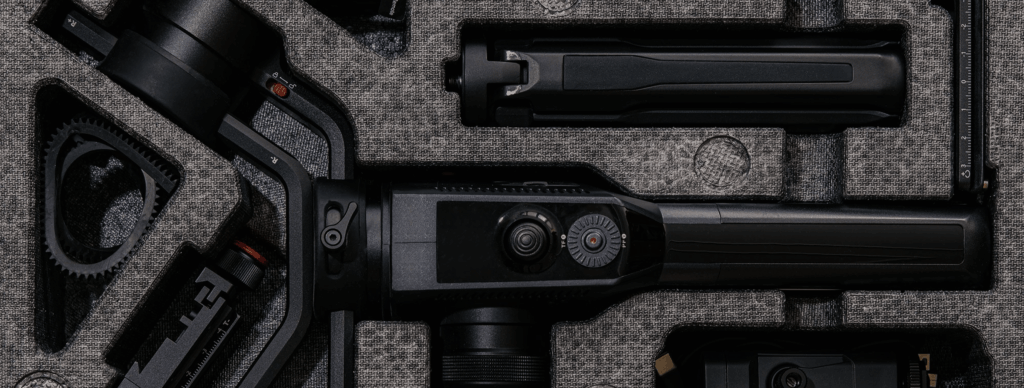
But the case works on the outside. And everything that happens inside is the zone of the insert. It is exactly what is responsible for whether the equipment will remain intact during movement.
When it is absent, the case essentially becomes just a box. And the difference begins to be felt very quickly:
| Without an insert | With an insert |
| Equipment lies however it happens | Each element has its place |
| Everything shifts on the road | Nothing moves |
| There are impacts between elements | Everything is fixed |
| Small elements get lost or shift | There is clear zoning |
| It is necessary to search and check | Opened – immediately work |
And exactly here it becomes clear that the insert is not about appearance and not about “convenient to place”. Its task is to make it so that inside there is order and nothing creates problems on the road.
Therefore, it directly affects how the case works in real conditions: whether it holds the equipment in place, or simply transports it however it happens.
Reason 3. Micro-impacts and vibrations
There is another point that is often ignored – small loads that are not visible immediately.
The case moves, and together with it vibration constantly occurs. Small impacts do not break the equipment instantly, but they repeat dozens and hundreds of times. And this is exactly the problem.
The equipment does not fail at one moment. It gradually wears out: scratches appear, fastenings weaken, play occurs, and elements begin to work worse.
At first it does not look critical. Today nothing serious, tomorrow as well, but over time it accumulates and gives a result.
Therefore, the case may look normal on the outside, but inside it is already working against the equipment. The problem does not appear sharply – it accumulates with each trip.
Reason 4. Small elements and chaos
Usually attention is kept on the main equipment. And everything else – cables, adapters, mounts – is simply thrown “somewhere nearby”.
At the start this does not look like a problem. But on the road everything mixes.
Cables get tangled. Small parts roll around. Something moves under other elements. Something gets lost completely.
And at some moment the case is opened – and inside there is not order, but chaos.
As a result:
- time is spent on searching
- something is constantly not in its place
- there is a risk of losing something
- work begins with nerves, not with the task

And here it is important to understand: it is not only about the equipment itself. Everything that goes with it is just as critical.
If there is no proper zoning, everything starts to live its own life.
Reason 5. The case is not for the task
Often a universal option is chosen to “fit everything”. At first glance it is convenient: one case, many scenarios. But in practice it fits only approximately. The equipment вроде fits, but is not fixed, access вроде exists, but is inconvenient, and you constantly have to rearrange or adjust something.
As a result, compromises appear, unnecessary movements, and the feeling that everything вроде works, but not as it should. A case must solve a specific task, not just fit the equipment. And this is exactly where the difference is between a “just case” and one that really helps in work.
How to avoid this
To not guess and not redo later, it is enough to answer a few simple questions.
- what exactly you transport
- how often it is in motion
- how sensitive the equipment is to impacts
- whether there are small elements
- in what conditions it is used
And based on this select the keys, not the other way around, first the task, then the solution
Conclusion
At the start, almost any case looks normal. It closes, the equipment is inside, everything seems ok. But on the road everything becomes visible: if there is movement inside – there will be impacts, if there is no fixation – there will be wear, if there is no order – there will be chaos. And at some point this begins to реально affect the work.
Therefore, the problem is not that the case is weak on the outside, but in what happens inside when you do not see it. A good case is when nothing moves, nothing hits, and you do not need to think about it. It just works.